Table of Contents
- Introduction
- What is Bending Machinery?
- Understanding Press Brake Forming
- Types of Bending Machinery
- Key Features of Modern Bending Machines
- Technical Specifications Table
- Benefits of Bending Machinery
- Applications of Press Brake Machines
- Industries Using Bending Machinery
- Why Choose Kirti Engineering Equipments?
- Maintenance and Safety Tips
- Government Standards & References
- Frequently Asked Questions (FAQs)
- Conclusion
Introduction
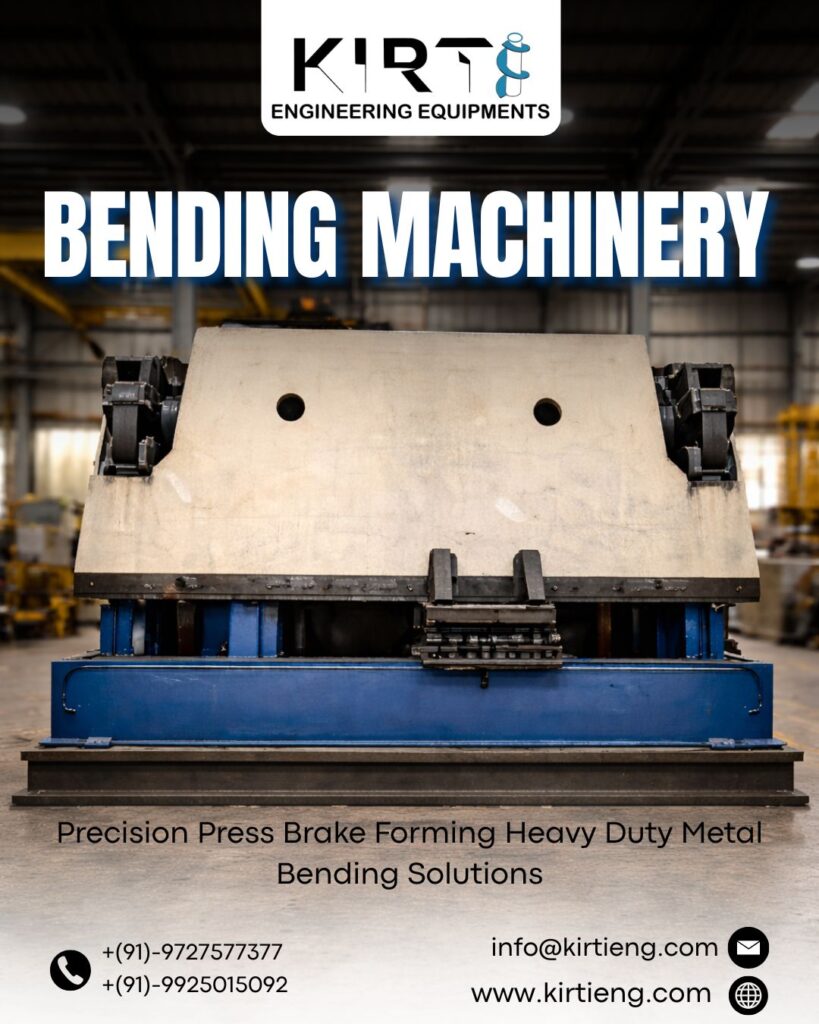
Bending machinery is one of the most important technologies used in modern metal fabrication and manufacturing industries. Designed to transform flat metal sheets into precise angles and complex shapes, press brake machines provide unmatched accuracy, efficiency, and consistency.
From automotive components and industrial equipment to construction materials and electrical enclosures, bending machinery plays a critical role in producing high-quality metal products. Advanced press brake forming technology enables manufacturers to achieve precise bends while minimizing material waste and maximizing productivity.
Kirti Engineering Equipments offers heavy-duty bending machinery engineered to meet the demanding requirements of industrial metal fabrication operations.
What is Bending Machinery?
Bending machinery refers to industrial equipment used to bend metal sheets, plates, and structural components into desired shapes and angles. These machines apply controlled force to deform metal without breaking or removing material.
Modern bending machinery is capable of processing:
- Mild Steel (MS)
- Stainless Steel (SS)
- Aluminum
- Copper
- Brass
- Galvanized Sheets
The most commonly used bending equipment is the Press Brake Machine, known for its high precision and versatility.
Understanding Press Brake Forming
Press brake forming is a manufacturing process where a punch presses a metal sheet into a die to create specific bends and profiles.
Working Process
| Step | Description |
|---|---|
| Material Placement | Sheet is positioned accurately |
| Tool Setup | Punch and die are aligned |
| Force Application | Hydraulic or mechanical force applied |
| Bending Operation | Metal bends to required angle |
| Inspection | Quality and accuracy checked |
This process ensures repeatable and accurate results for both small and large production runs.
Types of Bending Machinery
Hydraulic Press Brake
Uses hydraulic cylinders to generate powerful and precise bending force.
CNC Press Brake
Computer-controlled systems offer automation, programmable operations, and exceptional accuracy.
Mechanical Press Brake
Ideal for high-speed production environments.
Pneumatic Press Brake
Suitable for light-duty bending applications requiring quick cycle times.
Key Features of Modern Bending Machines
| Feature | Advantage |
|---|---|
| Heavy-Duty Construction | Long operational life |
| Precision Bending | Consistent results |
| CNC Controls | Automated operation |
| Hydraulic Technology | Smooth performance |
| Energy Efficiency | Reduced power consumption |
| High Productivity | Faster manufacturing |
| Safety Features | Enhanced operator protection |
| Flexible Tooling | Multiple bending applications |
Technical Specifications Table
| Specification | Details |
|---|---|
| Machine Type | Press Brake Bending Machine |
| Operation Mode | Hydraulic / CNC |
| Material Compatibility | MS, SS, Aluminum, Copper |
| Frame Structure | Heavy-Duty Steel Fabrication |
| Accuracy | High Precision |
| Bending Capacity | Application Specific |
| Control System | CNC / Manual |
| Safety Features | Emergency Stop & Guards |
| Maintenance | Low Maintenance |
Benefits of Bending Machinery
High Precision
Modern bending machines produce highly accurate bends with minimal deviation.
Improved Productivity
Automated controls reduce setup time and increase production output.
Reduced Material Waste
Accurate forming minimizes scrap and improves material utilization.
Cost Efficiency
Lower production costs through efficient operations and reduced rework.
Versatility
Suitable for a wide range of materials, thicknesses, and product designs.
Long-Term Reliability
Heavy-duty construction ensures dependable performance for years.
Applications of Press Brake Machines
Bending machinery is extensively used in:
- Sheet Metal Fabrication
- Electrical Panels
- Metal Cabinets
- Industrial Enclosures
- HVAC Components
- Construction Structures
- Automotive Parts
- Agricultural Equipment
- Solar Mounting Structures
- Heavy Engineering Components
Industries Using Bending Machinery
| Industry | Application |
|---|---|
| Automotive | Vehicle components |
| Construction | Structural fabrication |
| Electrical | Control panels and enclosures |
| Aerospace | Precision metal parts |
| Agriculture | Equipment manufacturing |
| Renewable Energy | Solar structures |
| Manufacturing | General fabrication |
| Heavy Engineering | Industrial components |
Why Choose Kirti Engineering Equipments?
Kirti Engineering Equipments delivers advanced bending solutions designed for industrial productivity and precision.
Key Advantages
✔ Precision press brake forming technology
✔ Heavy-duty machine construction
✔ High operational efficiency
✔ Durable and reliable performance
✔ Low maintenance requirements
✔ Custom machine configurations
✔ Advanced engineering standards
✔ Excellent technical support
Our bending machinery is engineered to meet modern manufacturing challenges while ensuring consistent quality and performance.
Maintenance and Safety Tips
To maintain optimal machine performance:
- Inspect hydraulic systems regularly.
- Lubricate moving parts as recommended.
- Check punch and die alignment.
- Monitor CNC system functionality.
- Clean machine surfaces after operation.
- Replace worn tooling promptly.
- Conduct routine preventive maintenance.
- Follow all safety procedures and operator guidelines.
Proper maintenance increases machine lifespan and reduces downtime.
Government Standards & References
For industrial manufacturing standards and machinery compliance, refer to:
- Ministry of MSME
- Bureau of Indian Standards (BIS)
- Ministry of Heavy Industries
- Development Commissioner MSME
These official organizations provide valuable information regarding industrial manufacturing standards, quality guidelines, and machinery regulations.
Frequently Asked Questions (FAQs)
1. What is a press brake machine used for?
A press brake machine is used to bend metal sheets into precise angles and shapes for manufacturing and fabrication applications.
2. Which materials can be bent using bending machinery?
Mild steel, stainless steel, aluminum, copper, brass, and galvanized steel can be processed.
3. What are the advantages of CNC press brakes?
CNC press brakes provide greater accuracy, automation, repeatability, and production efficiency.
4. Is bending machinery suitable for heavy-duty applications?
Yes. Heavy-duty press brake machines are designed for demanding industrial operations and thick metal sheets.
5. How often should bending machinery be maintained?
Regular inspections should be conducted weekly, with preventive maintenance performed according to manufacturer recommendations.
6. Can bending machines be customized?
Yes. Tooling, capacities, control systems, and machine configurations can be customized based on production needs.
7. Which industries benefit most from bending machinery?
Automotive, construction, electrical, aerospace, manufacturing, renewable energy, and heavy engineering industries extensively use bending machinery.
Conclusion
Bending machinery is a fundamental component of modern metal fabrication, enabling manufacturers to create precise, high-quality metal products efficiently and cost-effectively. Advanced press brake forming technology offers superior accuracy, flexibility, and productivity, making it an essential investment for industrial operations.
Whether producing structural components, industrial enclosures, automotive parts, or custom-fabricated products, businesses can significantly improve manufacturing performance with reliable bending machinery. Kirti Engineering Equipments provides precision-engineered press brake solutions that combine durability, efficiency, and innovation, helping industries achieve superior fabrication results while maintaining long-term operational reliability