Table of Contents
- Introduction
- What Are Aerodynamic Industrial Chimneys?
- Key Features of Aerodynamic Chimney Solutions
- Benefits of Advanced Chimney Design
- Technical Specifications Table
- Industrial Applications
- Why Aerodynamic Performance Matters
- Maintenance and Durability Considerations
- Frequently Asked Questions
- Conclusion
Introduction
Industrial chimney systems are far more than simple exhaust structures. They are essential components that directly impact airflow efficiency, environmental compliance, and operational performance.
kirtieng Traditional chimney designs may create turbulence, pressure losses, and inefficient gas movement. Aerodynamically engineered chimneys are designed to overcome these challenges by optimizing airflow pathways and reducing resistance throughout the exhaust system.
By incorporating advanced engineering principles, modern chimney structures ensure smooth gas flow, improved efficiency, and enhanced durability for industrial operations.
What Are Aerodynamic Industrial Chimneys?
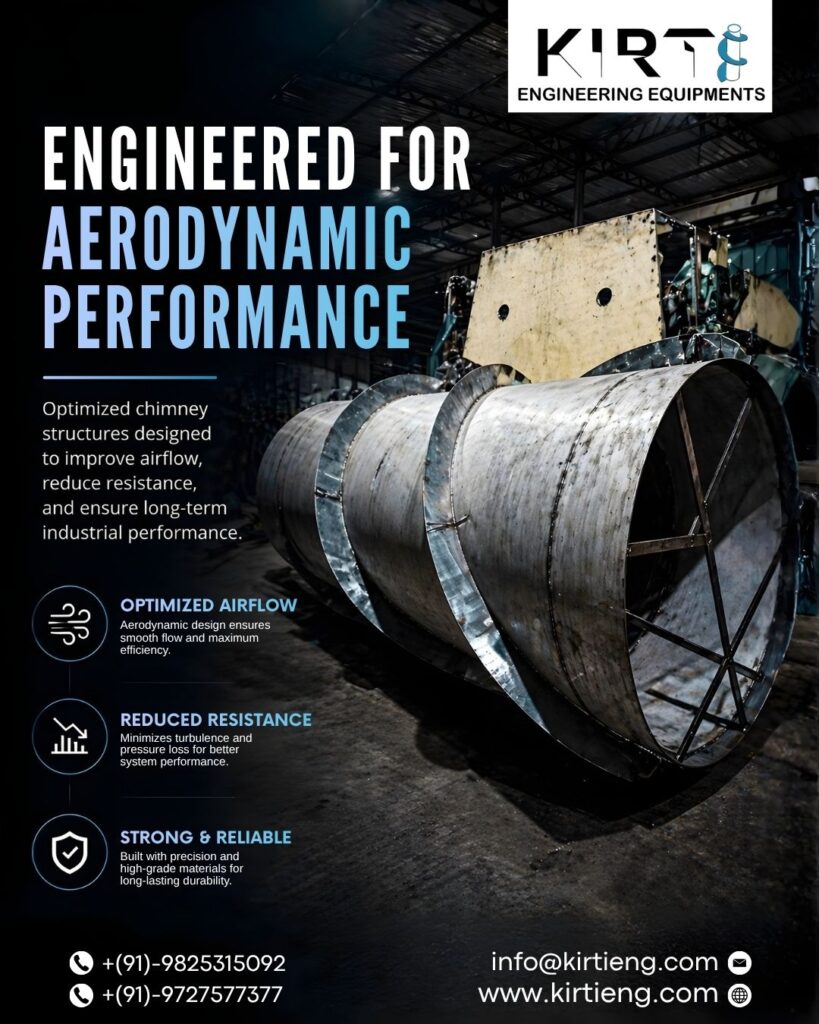
Aerodynamic industrial chimneys are specially designed exhaust structures engineered to maximize airflow efficiency while minimizing turbulence and pressure loss.
These chimneys utilize optimized shapes, precision fabrication, and structural engineering techniques to improve the movement of exhaust gases through industrial systems.
The result is a more efficient exhaust process that supports operational performance while reducing energy consumption and maintenance requirements.
Key Features of Aerodynamic Chimney Solutions
Optimized Airflow Design
Advanced aerodynamic geometry promotes smooth and uninterrupted airflow through the chimney system, helping maintain efficient exhaust gas movement.
Reduced Resistance
The design minimizes turbulence and pressure drops, allowing industrial systems to operate more efficiently with improved overall performance.
Strong and Reliable Construction
Manufactured using high-quality materials and precision fabrication techniques, these chimneys are built to withstand demanding industrial conditions.
Long-Term Durability
Robust engineering ensures resistance to environmental factors, corrosion, temperature fluctuations, and operational wear.
Custom Engineering Solutions
Each chimney can be designed according to specific industrial requirements, ensuring maximum compatibility with facility operations.
Precision Fabrication
Modern manufacturing processes guarantee dimensional accuracy and structural integrity for reliable performance.
Benefits of Advanced Chimney Design
| Benefit | Description |
|---|---|
| Improved Airflow | Enhances exhaust gas movement throughout the system |
| Reduced Pressure Loss | Minimizes resistance and turbulence |
| Increased Efficiency | Supports optimal industrial operations |
| Lower Maintenance Costs | Reduces wear caused by inefficient airflow |
| Enhanced Safety | Ensures effective removal of exhaust gases |
| Long Service Life | Built for continuous industrial usage |
| Structural Stability | Maintains performance under harsh conditions |
| Environmental Compliance | Supports proper emissions management |
Technical Specifications Overview
| Parameter | Details |
|---|---|
| Material Options | Mild Steel, Stainless Steel, Alloy Steel |
| Design Type | Aerodynamic Industrial Chimney |
| Fabrication Method | Precision Engineered Manufacturing |
| Surface Finish | Customized as per Requirement |
| Application | Industrial Exhaust Systems |
| Durability | High |
| Corrosion Resistance | Available |
| Customization | Yes |
| Installation Support | Available |
| Maintenance Requirement | Low |
Industrial Applications
Manufacturing Plants
Used for effective exhaust management in production facilities where continuous operations require reliable ventilation systems.
Power Generation Facilities
Supports efficient removal of exhaust gases while maintaining operational efficiency.
Chemical Processing Industries
Helps safely manage industrial emissions and process-related exhaust requirements.
Pharmaceutical Plants
Provides controlled exhaust management in sensitive production environments.
Food Processing Units
Supports ventilation and emission control while maintaining operational standards.
Metal Processing Industries
Handles high-temperature exhaust systems commonly found in fabrication and processing plants.
Why Aerodynamic Performance Matters
Aerodynamic performance directly influences the effectiveness of an industrial chimney system.
A poorly designed chimney can create excessive turbulence, increase energy consumption, and reduce overall system efficiency. In contrast, an aerodynamically optimized structure ensures:
- Smooth airflow movement
- Reduced pressure drop
- Improved exhaust efficiency
- Better operational reliability
- Lower maintenance costs
- Enhanced environmental performance
These advantages contribute significantly to long-term industrial productivity and cost savings.
Maintenance and Durability Considerations
Proper maintenance is essential for ensuring maximum chimney performance.
Recommended practices include:
- Regular structural inspections
- Surface corrosion monitoring
- Cleaning of exhaust pathways
- Periodic welding inspections
- Performance testing and airflow evaluation
- Scheduled preventive maintenance
With proper care, high-quality industrial chimney systems can provide reliable service for many years.
Frequently Asked Questions (FAQs)
What is an aerodynamic industrial chimney?
An aerodynamic industrial chimney is a specially engineered exhaust structure designed to improve airflow efficiency and reduce resistance within industrial ventilation systems.
How does aerodynamic design improve performance?
Aerodynamic design minimizes turbulence and pressure loss, allowing exhaust gases to flow more efficiently through the system.
Which industries use industrial chimneys?
Industries including manufacturing, power generation, chemical processing, pharmaceuticals, food processing, and metal fabrication commonly use industrial chimney systems.
What materials are used for chimney fabrication?
Industrial chimneys are commonly fabricated using mild steel, stainless steel, alloy steel, and other specialized materials depending on application requirements.
Are custom chimney designs available?
Yes, industrial chimneys can be customized according to height, diameter, material specifications, and operational requirements.
How long do industrial chimneys last?
With proper fabrication, installation, and maintenance, industrial chimneys can provide reliable performance for several decades.
Conclusion
Aerodynamic industrial chimney solutions are essential for achieving efficient exhaust management, improved airflow, and long-term operational reliability. By reducing resistance and optimizing airflow, these advanced chimney systems help industries improve efficiency, lower maintenance costs, and maintain safe operating environments.
Kirti Engineering Equipments delivers precision-engineered chimney solutions designed to meet the demanding requirements of modern industries. With optimized airflow design, durable construction, and customized engineering capabilities, these chimney systems provide dependable performance and long-term value for industrial operations.
Check this:- https://moef.gov.in/