Table of Contents
- Introduction
- What Are Industrial Blowers?
- Why Industrial Airflow Systems Matter
- Key Features of Industrial Blowers
- Types of Industrial Blowers
- Applications Across Industries
- Benefits of Investing in Quality Airflow Equipment
- Technical Specifications
- Why Choose Kirti Engineering Equipment?
- Maintenance Tips
- FAQs
- Conclusion
Introduction
Industrial Blowers play a crucial role in modern manufacturing and processing facilities. From maintaining proper ventilation to supporting production processes, these systems help industries achieve better efficiency, safety, and productivity. Businesses operating in sectors such as cement, steel, pharmaceuticals, chemicals, food processing, and power generation depend on reliable airflow systems to keep operations running smoothly.
The demand for Industrial continues to grow as industries seek energy-efficient equipment capable of delivering consistent performance under challenging conditions. Proper air circulation helps control temperature, remove contaminants, improve working conditions, and support critical industrial processes.
Kirti Engineering Equipment manufactures high-performance Industrial Blowers designed to meet the requirements of diverse industries. Built with durable materials and advanced engineering, our solutions provide reliable operation, long service life, and excellent energy efficiency.
What Are Industrial Blowers?
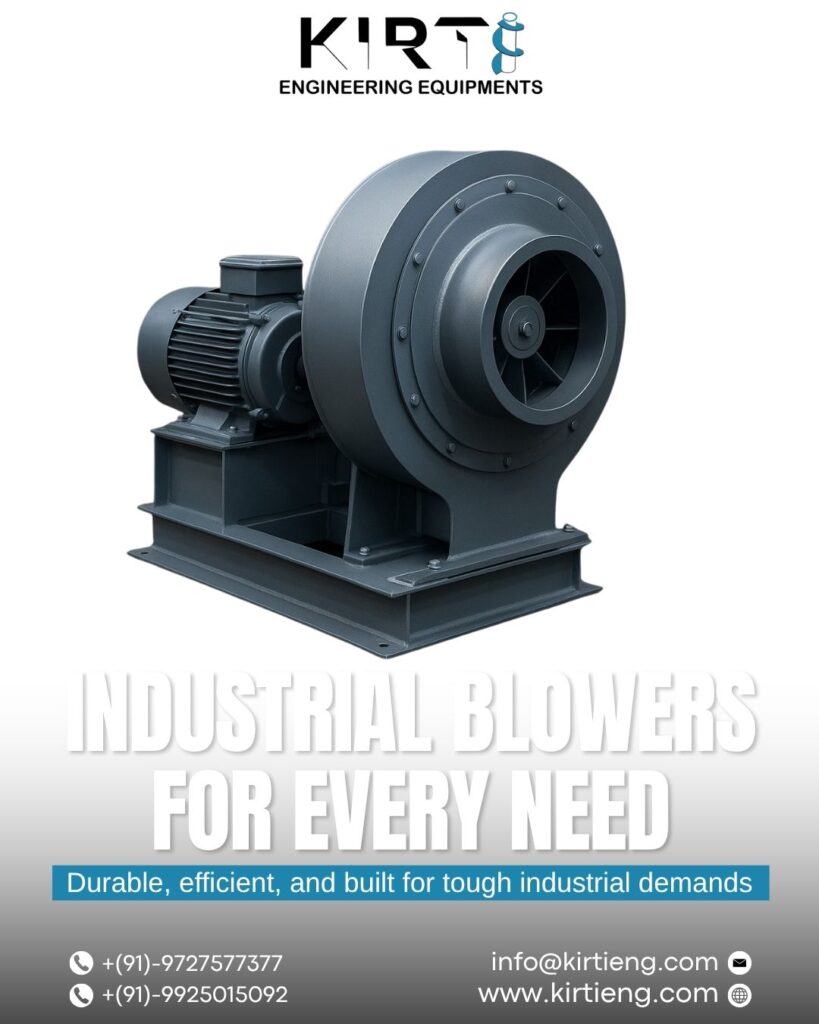
Industrial Blowers are mechanical devices designed to move air or gases through industrial systems. Unlike ordinary fans, they generate higher pressure and airflow, making them suitable for demanding industrial environments.
These machines are widely used for ventilation, dust collection, cooling, drying, exhaust systems, combustion air supply, and material handling applications. Depending on operational requirements, Industrial can be customized to deliver specific airflow capacities and pressure levels.
Their ability to maintain continuous airflow makes them essential components in many industrial facilities where consistent performance is critical.
Why Industrial Airflow Systems Matter
Efficient air movement directly impacts production quality and workplace safety. Industry helps create controlled environments where processes can operate efficiently, and employees can work safely.
Major advantages include:
- Better air circulation throughout facilities
- Removal of airborne contaminants
- Improved ventilation in enclosed areas
- Support for drying and cooling operations
- Reduced equipment overheating
- Enhanced process efficiency
- Improved product quality
- Compliance with environmental standards
Without properly designed airflow systems, industries may experience reduced efficiency, higher maintenance costs, and safety concerns.
Key Features of Industrial Blowers
Modern Industrial are engineered to perform continuously under demanding industrial conditions.
| Feature | Benefit |
|---|---|
| Heavy-Duty Construction | Long operational life |
| Energy-Efficient Design | Lower electricity consumption |
| High Airflow Capacity | Improved process performance |
| Corrosion Resistance | Suitable for harsh environments |
| Low Maintenance Requirements | Reduced downtime |
| Reliable Performance | Continuous operation |
| Custom Design Options | Application-specific solutions |
| Low Noise Operation | Improved workplace comfort |
These features make Industrial Blowers a valuable investment for facilities seeking long-term operational reliability.
Types of Industrial Blowers
Centrifugal Blowers
Among the most common Industrial centrifugal models use rotating impellers to generate airflow and pressure.
Benefits
- High efficiency
- Durable construction
- Reliable performance
- Suitable for high-pressure applications
These units are commonly used in dust collection systems, industrial ventilation, and material handling operations.
High-Pressure Blowers
High-pressure Industrial Blowers are designed for applications that require substantial pressure generation.
Benefits
- Strong airflow performance
- Consistent pressure output
- Reliable operation
- Suitable for demanding processes
Typical applications include pneumatic conveying systems and combustion air supply.
Medium-Pressure Blowers
These systems offer balanced airflow and pressure, making them suitable for a wide range of industrial processes.
Benefits
- Energy-efficient operation
- Lower operating costs
- Flexible applications
- Easy maintenance
Medium-pressure units are often used for cooling systems and factory ventilation.
Customized Airflow Solutions
Many industries require specially engineered Industrial Blowers designed around unique operational requirements.
Customization options may include:
- Airflow capacity
- Pressure levels
- Construction materials
- Drive configurations
- Installation requirements
- Environmental conditions
Customized systems help businesses achieve maximum operational efficiency.
Applications Across Industries
Industrial Blowers serve a wide range of sectors where controlled airflow is essential.
| Industry | Application |
|---|---|
| Cement Industry | Dust collection and material transport |
| Steel Plants | Furnace ventilation |
| Chemical Processing | Process air circulation |
| Food Industry | Drying and cooling |
| Pharmaceutical Sector | Cleanroom ventilation |
| Textile Industry | Fiber handling |
| Power Plants | Combustion air supply |
| Paper Manufacturing | Drying and exhaust operations |
The versatility of Industrial Blowers makes them suitable for both small and large-scale industrial operations.
Benefits of Investing in Quality Airflow Equipment
Increased Productivity
Reliable airflow helps maintain stable production conditions and minimizes interruptions.
Energy Savings
Advanced Industrial Blowers are designed to deliver high performance while reducing power consumption.
Lower Maintenance Costs
Durable components reduce wear and decrease maintenance requirements.
Better Workplace Safety
Proper ventilation helps remove dust, fumes, and airborne particles from work environments.
Extended Equipment Life
Consistent airflow protects machinery from overheating and operational stress.
Environmental Compliance
Industrial Blowers assist facilities in meeting air quality and environmental regulations.
Learn More About Industrial Ventilation Standards
For additional information about industrial ventilation and workplace air quality best practices, businesses can refer to the guidelines published by the Occupational Safety and Health Administration (OSHA).
Technical Specifications
| Parameter | Specification |
|---|---|
| Airflow Capacity | Customizable |
| Pressure Range | Medium to High |
| Motor Power | As Required |
| Material | Mild Steel / Stainless Steel |
| Drive Type | Direct Drive / Belt Drive |
| Mounting | Base Mounted |
| Efficiency | High Energy Efficiency |
| Application | Industrial Air Handling |
Why Choose Kirti Engineering Equipment?
Kirti Engineering Equipment is committed to manufacturing Industrial Blowers that combine performance, durability, and efficiency.
Our Advantages
- Advanced manufacturing processes
- Customized engineering solutions
- Durable construction
- Energy-efficient designs
- Competitive pricing
- Technical consultation
- Prompt after-sales support
- Industry-specific expertise
Our team works closely with customers to provide airflow solutions tailored to their operational requirements.
Maintenance Tips
Proper maintenance ensures Industrial Blowers continue operating efficiently for years.
Recommended Practices
- Inspect bearings regularly
- Check motor alignment
- Clean impellers and airflow passages
- Monitor vibration levels
- Lubricate moving components
- Replace worn parts promptly
- Maintain proper operating conditions
- Schedule preventive maintenance
Routine inspections can significantly reduce downtime and repair costs.
Frequently Asked Questions
What are Industrial Blowers used for?
Industrial Blowers are used for ventilation, cooling, drying, dust collection, exhaust systems, and process air applications across various industries.
Which industries use Industrial Blowers?
Industries including cement, steel, chemical processing, pharmaceuticals, food manufacturing, textiles, and power generation commonly use these systems.
How are Industrial Blowers different from fans?
They generate higher pressure and are designed for demanding industrial applications requiring powerful airflow.
Are these systems energy efficient?
Yes. Modern Industrial Blowers are engineered to maximize airflow performance while minimizing energy consumption.
Can Industrial Blowers be customized?
Yes. They can be designed according to airflow requirements, pressure levels, materials, and industrial applications.
How often should maintenance be performed?
Routine inspections should be conducted regularly, with preventive maintenance schedules based on operating conditions.
Conclusion
Industrial Blowers are essential for maintaining efficient airflow in manufacturing and processing environments. They support ventilation, cooling, dust control, drying, and numerous industrial operations that require dependable air movement.
Choosing high-quality Industrial Blowers helps businesses improve productivity, reduce operating costs, enhance workplace safety, and extend equipment lifespan. Kirti Engineering Equipments delivers reliable and durable airflow solutions designed to perform under demanding industrial conditions. With customized engineering, quality construction, and dedicated support, we provide solutions that help industries achieve long-term operational success.