Energy-Efficient Air Ventilators have become an essential part of modern industrial infrastructure. As businesses continue searching for practical ways to reduce operating costs while maintaining a healthy work environment, effective ventilation has become more important than ever. Excessive heat, humidity, and poor airflow can negatively affect employees, machinery, and overall productivity. A well-designed ventilation system helps overcome these challenges by creating a continuous exchange of fresh and stale air.
Industrial facilities often generate large amounts of heat during daily operations. Manufacturing equipment, production processes, and enclosed structures can cause temperatures to rise quickly. Without proper airflow, these conditions may lead to discomfort, reduced efficiency, and increased cooling expenses. This is where Energy-Efficient Air Ventilators offer a practical solution by improving air circulation without relying heavily on electricity.
The growing focus on sustainability has further increased the demand for natural ventilation systems. Businesses are looking for solutions that not only improve workplace conditions but also contribute to energy conservation and environmental responsibility. Modern roof ventilators meet these requirements by providing reliable performance with minimal maintenance.
Table of Contents
- Understanding Energy-Efficient Air Ventilators
- The Importance of Industrial Ventilation
- Working Principle of Roof Ventilation Systems
- Key Benefits for Industrial Facilities
- Comparison Table
- Common Industrial Applications
- Contribution to Energy Savings
- Factors to Consider Before Installation
- Why Choose Kirti Engineering
- Frequently Asked Questions
- Conclusion
Understanding Energy-Efficient Air Ventilators
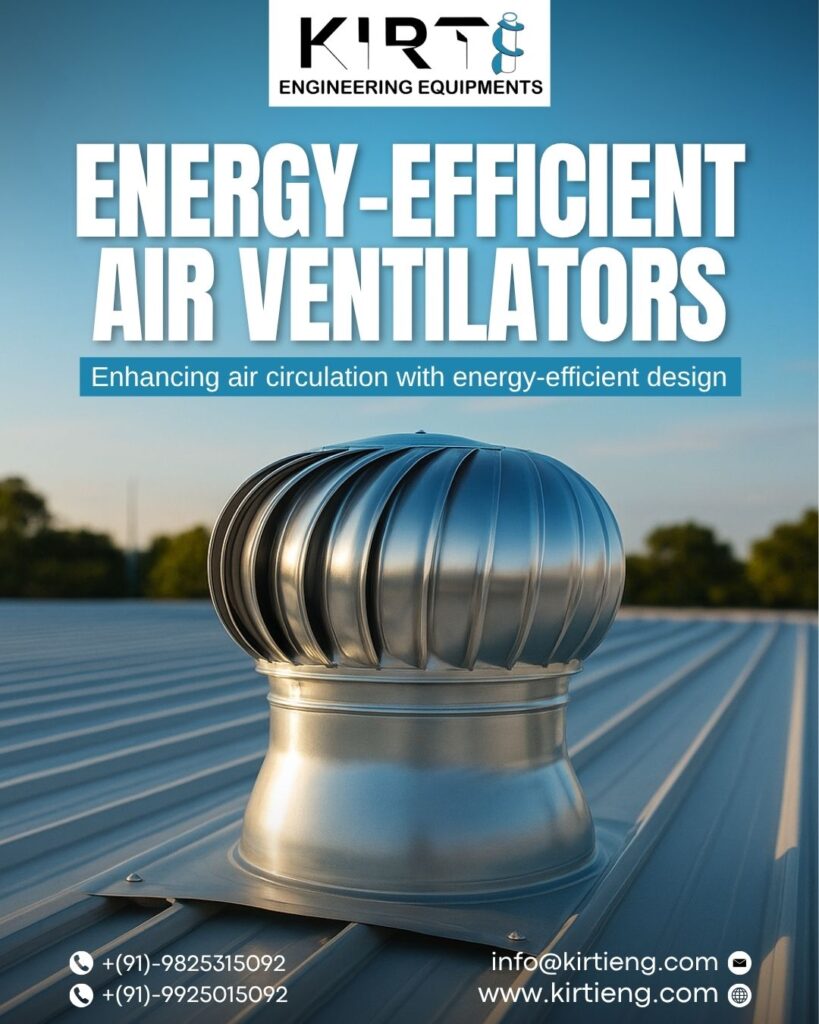
Energy-Efficient Air Ventilators are specially designed roof-mounted systems that remove hot and contaminated air from industrial and commercial buildings. These units operate using natural wind movement and thermal buoyancy, allowing continuous ventilation without significant energy consumption.
The system works by encouraging warm air to move upward and escape through the ventilator. As stale air exits the building, fresh air enters through available openings, Energy-Efficient Air Ventilators creating a natural airflow cycle. This process helps maintain a comfortable indoor environment throughout the year.
Unlike conventional mechanical ventilation systems that require constant electrical power, these ventilators utilize naturally available resources. This makes them an economical and environmentally friendly option for businesses seeking long-term operational savings.
The Importance of Industrial Ventilation
A well-ventilated workplace directly impacts employee comfort, equipment performance, and overall operational efficiency. In many industrial settings, heat generated from machinery can accumulate rapidly, especially in large enclosed spaces. Energy-Efficient Air Ventilators. Excessive temperatures can create an uncomfortable working environment and place additional stress on cooling systems.
Poor ventilation can also lead to the buildup of dust, fumes, moisture, and airborne contaminants. Over time, these factors may affect indoor air quality and contribute to maintenance issues. Proper airflow helps remove unwanted pollutants while maintaining healthier working conditions.
Industries that invest in effective ventilation often experience improved productivity and reduced operating costs. Better air circulation supports both workforce well-being and equipment longevity, making ventilation an important component of facility management.
How Modern Roof Ventilation Systems Work
The operating principle behind modern ventilation equipment is simple yet highly effective. Wind passing over the ventilator causes its turbine to rotate. Energy-Efficient Air Ventilators. This movement creates a low-pressure zone that pulls hot air from inside the building and releases it into the atmosphere.
At the same time, naturally rising warm air supports the extraction process. The continuous removal of heated air encourages cooler outside air to enter the structure, helping regulate indoor temperatures.
Because this process depends largely on natural airflow, businesses can maintain effective ventilation while reducing energy consumption. This makes roof-mounted ventilation systems particularly attractive for facilities seeking cost-effective environmental control.
Benefits of Energy-Efficient Air Ventilators
One of the most important advantages of Energy-Efficient Air Ventilators is their ability to lower energy expenses. Since they require little to no electrical power for operation, organizations can significantly reduce their dependence on powered ventilation equipment.
Another major benefit is improved indoor air quality. Continuous airflow helps remove airborne particles, fumes, and excess moisture that can accumulate within industrial spaces. Energy-Efficient Air Ventilators Cleaner air contributes to a healthier and more comfortable workplace.
Heat reduction is equally important. Industrial buildings often experience temperature fluctuations that affect productivity and equipment performance. Energy-Efficient Air Ventilators. Proper ventilation helps remove trapped heat and maintain more stable indoor conditions.
These systems are also known for their durability. High-quality ventilators are manufactured using corrosion-resistant materials capable of withstanding challenging industrial environments. Their robust construction contributes to long service life and reduced maintenance requirements.
Environmental sustainability is another reason many organizations adopt natural ventilation solutions. By lowering electricity consumption, businesses can reduce their carbon footprint while supporting energy-efficiency initiatives.
Comparison Table
| Feature | Conventional Ventilation | Natural Roof Ventilation |
|---|---|---|
| Power Consumption | High | Very Low |
| Operating Cost | Higher | Lower |
| Maintenance Needs | Moderate to High | Minimal |
| Environmental Impact | Greater | Reduced |
| Installation Complexity | Moderate | Simple |
| Long-Term Savings | Moderate | Significant |
| Air Circulation | Good | Excellent |
| Reliability | Power Dependent | Continuous |
Common Industrial Applications
Industrial ventilation solutions are widely used across various sectors. Manufacturing plants utilize them to remove process-generated heat and improve employee comfort. Warehouses benefit from enhanced airflow that helps maintain better storage conditions and reduces temperature buildup.
Food processing facilities often require consistent ventilation to manage humidity and maintain hygienic environments. Pharmaceutical companies rely on effective airflow systems to support controlled operating conditions. Textile units, engineering workshops, logistics centers, and commercial structures also benefit from improved ventilation performance.
The flexibility of these systems allows them to be integrated into both new construction projects and existing industrial facilities.
Contribution to Energy Savings and Sustainability
Energy efficiency has become a key priority for businesses seeking long-term operational improvements. By reducing dependence on powered ventilation equipment, organizations can lower electricity consumption and improve overall resource utilization.
Natural airflow systems contribute to sustainability goals by minimizing environmental impact. Lower energy usage translates into reduced greenhouse gas emissions and supports responsible building practices. These benefits make ventilation upgrades an attractive investment for companies pursuing greener operations.
For additional information about energy-efficient building practices, visit:
https://www.energy.gov/eere/buildings
Factors to Consider Before Installation
Selecting the right ventilation solution requires careful evaluation of several factors. Building dimensions, roof design, internal heat generation, and airflow requirements all influence system performance.
Material quality is another important consideration. Durable aluminum and stainless-steel components generally provide better resistance to corrosion and environmental exposure. Local climate conditions should also be assessed to ensure optimal efficiency throughout the year.
Professional guidance can help determine the appropriate number and placement of ventilators, ensuring maximum airflow and long-term performance.
Why Choose Kirti Engineering?
Kirti Engineering provides reliable industrial ventilation solutions designed to improve airflow and support energy-efficient operations. With a focus on quality manufacturing and durable construction, the company delivers products that meet the demands of modern industrial facilities.
By combining engineering expertise with high-quality materials, Kirti Engineering helps businesses create healthier work environments while reducing operating costs. Their commitment to performance and customer satisfaction makes them a trusted choice for industrial ventilation requirements.
Frequently Asked Questions
Do Energy-Efficient Air Ventilators consume electricity?
Most models operate using natural wind energy and thermal airflow, significantly reducing or eliminating electricity consumption.
Can they help reduce indoor heat?
Yes. Continuous extraction of warm air helps lower heat accumulation and improve workplace comfort.
Are they suitable for industrial buildings?
They are commonly installed in factories, warehouses, production units, workshops, and commercial structures.
Do they require frequent maintenance?
No. Quality roof ventilators are designed for long-term operation with minimal maintenance requirements.
Can they support sustainability goals?
Yes. Reduced energy usage contributes to lower carbon emissions and improved environmental performance.
Conclusion
Energy-Efficient Air Ventilators offer an effective solution for businesses seeking improved airflow, lower operating costs, and better indoor environmental conditions. Their ability to function through natural airflow makes them a practical alternative to energy-intensive ventilation systems.
As industrial facilities continue focusing on efficiency and sustainability, investing in advanced roof ventilation systems can provide substantial long-term benefits. From improving air quality and reducing heat buildup to supporting environmental objectives, these systems represent a valuable addition to modern industrial infrastructure.